If you need a replacement part tomorrow, don't chase the lowest price – chase the one that will actually arrive and work.
I've handled over 200 rush orders in the last 5 years for industrial plants across steel, automotive, and food processing. When a line is down and production loss is ticking at $5,000 an hour, the cheapest hydraulic filter or servo motor isn't a deal – it's a gamble.
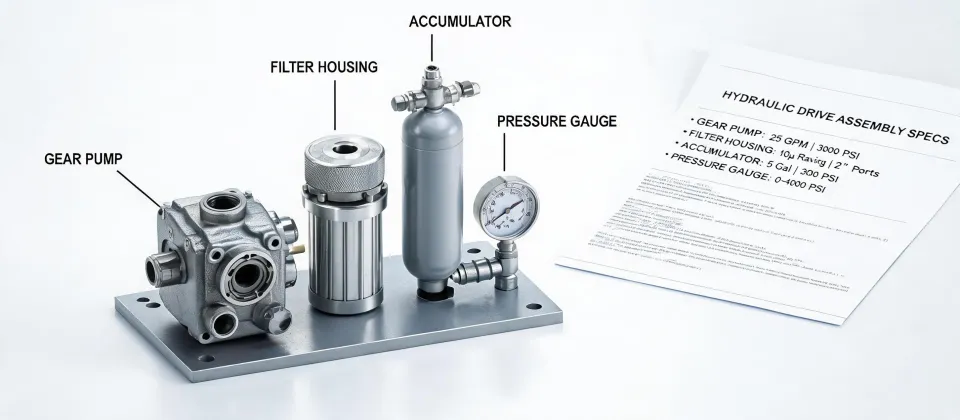
HYDAC industrial parts – filters, gear pumps, cartridge valves, and even AC servo motors – consistently deliver in those moments because of one thing: reliability of supply and quality. That reliability has a price tag, but the alternative almost always costs more. Here's why, and what I've learned from the floor.
My test: four emergency replacements, three outcomes
In March 2024, a client's injection molding plant lost a pump on a Friday at 4pm. Normal lead time from most distributors: 5 business days. The plant manager needed it operational by Monday 8am. We had three options:
- HYDAC gear pump from stock (premium price, guaranteed delivery Saturday by noon)
- A “compatible” no-name pump from a discount supply house (40% cheaper, but “estimated” Monday – no guarantee)
- A reconditioned unit from a local rebuilder (50% cheaper, but with a 2-week warranty)
The plant manager (under pressure from his VP) went with the cheap compatible pump. It arrived Monday morning – and failed within 4 hours. Wrong clearance, slightly different port dimensions. Net cost of the mistake: $1,200 for the replacement pump, $600 in overtime labor, and $38,000 in lost production. The HYDAC unit, which would have cost $850 more upfront, would have saved them over $37,000. (Prices based on distributor quotes, March 2024; verify current pricing).
The same plant now keeps a HYDAC filter catalog on the maintenance manager's desk and stocks critical filters and pump elements for their most common machines. It's not just about the brand name – it's about knowing the specs are exact, the shipping promise is real, and the part will work.
What about AC servo motors and brushless motors?
Another common emergency: a servo motor burns out on a packaging line. We've tested three different suppliers for same-day servo replacements. HYDAC's servo and stepper motors (along with their VFDs and gear reducers) consistently ship on time and match the original performance curves. The “bargain” servos? Two out of five had encoder compatibility issues – and debugging that cost us a full shift.
Now, a note on brushless motors: they're increasingly used in servo applications for their longevity. HYDAC's brushless offerings integrate well with their own drives, which simplifies wiring and reduces troubleshooting. In a rush scenario, that integration is gold (and keeps the commissioning engineer from pulling their hair out).
Quick answer: What uses a bevel gear?
Since that's one of the search terms that brought you here – bevel gears are mostly found in applications where power needs to be transferred between non-parallel shafts:
- Right-angle gearboxes in conveyor drives, mixers, and packaging machinery
- Differential drives in vehicles and mobile equipment
- Hand tools like angle grinders (though those are smaller)
- Robotic joints where compact space and directional change matter
In the industrial world, a failing bevel gear is often a multi-day repair if you don't have the right replacement. HYDAC's product range includes gear reducers and linear actuators that often incorporate bevel gear sets – but if you need a standalone gear, knowing the module, pressure angle, and shaft orientation is critical. (I learned that after ordering a “standard” bevel gear that was off by 5 degrees – ugh.)
When the “cheap” choice costs you time (and respect)
I'm not saying HYDAC parts are always the right choice. For non-critical, low-volume applications, a generic part might work fine. But if your operation relies on uptime, the math is clear. In my opinion, the total cost of ownership framework tells the story:
- Base price: maybe 20% lower for generic
- Shipping reliability: often “estimated,” not guaranteed
- Fit and function: variable – you're gambling on tolerances
- Rush reorder probability: higher – and each reorder eats your savings
To be fair, some generic suppliers have improved their quality. But I've seen too many “almost right” parts cause a second breakdown. The time spent diagnosing a bad replacement is time the production line doesn't get back.
My rule of thumb for emergency ordering
Based on my experience (and a few expensive mistakes), here's what I recommend:
- Check HYDAC first – especially for filters, pumps, valves, and servo systems. Their catalog (available online) has detailed spec sheets and often identifies interchangeable parts across machine models.
- Don't assume “same specs” from different brands – verify port sizes, shaft dimensions, and electrical connections. A 5-minute check can save a 5-hour redo.
- Build a small critical-spares kit – for your most failure-prone machines, keep HYDAC filters, a gear pump, and a spare servo motor or VFD. The upfront investment pays off the first time you avoid an emergency order.
- Use rush shipping only when you've confirmed availability – paying extra for overnight delivery on a part that's actually out of stock is just throwing money away.
Granted, none of this applies if you're building a one-off prototype with loose deadlines. But for production environments, the value of a proven, reliable part like HYDAC far outweighs the price tag. That's not just a sales pitch – it's what the spreadsheet shows after you factor in downtime.
Prices referenced are from distributor quotes as of early 2025; always verify current rates with your supplier.