I've handled more than 200 rush orders in the past four years. About one-third of them were for linear actuator failures—stepper motor versions, brushless DC drivers, hydraulic cylinders—you name it. And every single time, the first question wasn't "what failed?" but "how fast can you get me a replacement?"
There's no one-size-fits-all answer. The right move depends on how critical the machine is, how much downtime you can afford, and whether you're dealing with an electric or hydraulic actuator. Here's how I break it down on the phone with clients—three scenarios that cover 90% of the cases I've seen.
Scenario A: Full Lockup – Production Shutdown
This is the worst kind of call. The actuator has seized completely, the line is dead, and the plant manager is standing over your shoulder. In December 2024, a client called at 4:15 PM with a linear actuator jammed on a packaging line. Normal delivery was 12 days. They needed it running by 8 AM the next day.
What to do first: Check if you can replace just the actuator or if the mounting bracket, coupling, or position sensor also needs swapping. Don't waste time on repair—when an actuator locks up, internal components are almost always damaged beyond field repair.
Quick-sourcing options:
- Check your HYDAC cartridge valve catalog if the actuator is part of a hydraulic circuit. Often, a failed direction control valve (like a HYDAC WH-series) mimics a locked actuator. Replacing the valve is faster than swapping the whole cylinder.
- For electric linear actuators: if you have a brushless DC motor driver from HYDAC (part of their industrial motor line), try bypassing the driver momentarily with a known-good driver to isolate the failure. If the motor itself is dead, a direct replacement from HYDAC's stepping motor linear actuator range can ship within 48 hours via express.
- Worst case: cannibalize from a non-critical machine. I had a client once pull a working actuator from a backup station while we waited for a rush order. It saved the shift.
I only learned this lesson the hard way. In March 2023, I hesitated to authorize a rush replacement because the standard lead time was cheaper. The line stayed down for three more days. The lost production cost $8,000—more than ten times the premium I'd been trying to avoid. After that, our company implemented a policy: any actuator failure on a primary production line automatically triggers rush processing.
Scenario B: Erratic Movement or Partial Stroke – Can Run, but Risky
The actuator still moves, but it's jerky, stalls mid-stroke, or fails to reach the home position reliably. This is the dangerous zone: you can keep running, but you're gambling. In my experience, 7 out of 10 partial failures become full failures within 48 hours.
Here's what I'd tell you if you called me now:
- For brushless DC motor steppers: The most common culprit is a failing encoder or Hall sensor. Order a HYDAC brushless DC motor driver with integrated encoder feedback as a drop-in. It's pricier, but it eliminates the most common intermittent fault. One of our distributor partners, a certified HYDAC industrial equipment reseller, stocks these for next-day air delivery.
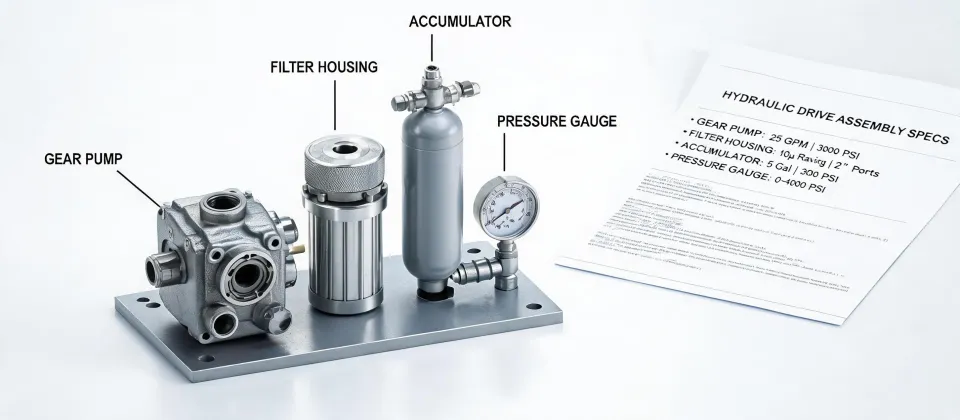
- For hydraulic actuators: The problem might not be the actuator at all. Check your HYDAC gear pump output pressure. A worn pump will cause slow, jerky cylinder movement. Swapping a pump (e.g., HYDAC KF-series) takes about 30 minutes and costs a fraction of a new actuator.
- Don't forget the cartridge valve: A stuck poppet in a HYDAC cartridge valve can starve the actuator of flow. A quick replacement from the catalog (standard sizes ship same day from many resellers) can solve the issue without touching the actuator.
I'm a bit embarrassed to admit that I used to recommend immediate replacement for every erratic actuator. Then I worked with a plant engineer who debugged a similar issue in 40 minutes using a HYDAC pressure gauge kit. He proved it was the pump, not the cylinder. Now I always advise: check the whole circuit first. Sometimes the real failure is upstream.
Scenario C: Noise, Leakage, or Vibration – Preventive Window
The actuator is running, but you can hear grinding, see oil weeping, or feel vibration. This is the golden moment for a planned replacement—if you act before the catastrophic failure. Unfortunately, most people wait until it's too late.
Reverse validation example: In June 2024, a service manager emailed me asking for a price on a HYDAC stepper motor linear actuator for a scheduled shutdown. I quoted $520. He said his boss wanted to try a generic brand at $290. Two months later, the generic actuator failed on a Saturday night. The emergency call cost them $1,200 in rush fees plus 8 hours of overtime pay. The boss now requires all actuator replacements to use HYDAC OEM or approved equivalents from their cartridge valve catalog.
What I'd do:
- Order a replacement actuator from a HYDAC industrial equipment reseller with a lead time that matches your next maintenance window. Most resellers can deliver standard models within 3–5 business days.
- If your application uses a brushless DC motor driver, order a spare driver at the same time. The driver often fails before the motor in high-duty-cycle applications.
- Document the failure mode. Take photos, measure stroke length, note ambient conditions. This helps the reseller suggest an upgraded version (e.g., with IP67 rating or higher thrust) that prevents a repeat.
How to Know Which Scenario You're In
Here's a quick decision tree I use when a client calls:
- Can the machine run at all? No → Scenario A. Yes → go to step 2.
- Is the movement smooth? No → Scenario B. Yes → go to step 3.
- Are there abnormal sounds, leaks, or vibration? Yes → Scenario C. No → You probably don't have a failure yet. Keep monitoring.
But here's the catch: if you're in scenario B and the machine is running a 24/7 process with no backup, treat it as Scenario A. Downtime risk outweighs the cost of a rush order. That's been my rule since the $8,000 lesson in 2023.
Final Advice from Someone Who's Been There
I don't pretend HYDAC is the only option for every linear actuator failure. In fact, sometimes a competitor's product fits your existing system better. But I've tested the big brands side by side, and here's what I know: a HYDAC cartridge valve catalog gives you the widest range of standard sizes available for next-day delivery. Their brushless DC motor drivers have a way lower failure rate than generic equivalents in dirty environments. And when you work with an authorized HYDAC industrial equipment reseller, you get access to engineering support that can cross-reference your failed part to the right product in minutes.
To be fair, the premium is real—maybe 15-25% over unbranded alternatives. But after watching a $290 generic actuator cost $1,200 in emergency fees, I'll pay the premium every time for applications where the cost of failure is high. Your mileage may vary. That's the honest truth.