-
1. Where do I find a reliable Hydac catalog or price list?
-
2. How do I choose a Hydac industrial equipment reseller – lowest price or longest relationship?
-
3. What should I check when vetting ball bearing suppliers?
-
4. Where can I find an AC motor diagram, and why does it matter for procurement?
-
5. What happens when a linear actuator fails – and how do I prevent it?
-
6. Are Hydac parts really 'premium' enough to justify the price?
I've been managing our company's motion control & filtration budget for over six years, tracking about $180,000 in annual spending across Hydac filters, pumps, servo motors, and bearings. In that time, I've learned the hard way which shortcuts pay off and which ones (spoiler) don't. Here are the common questions I hear from fellow buyers, answered from the trenches.
1. Where do I find a reliable Hydac catalog or price list?
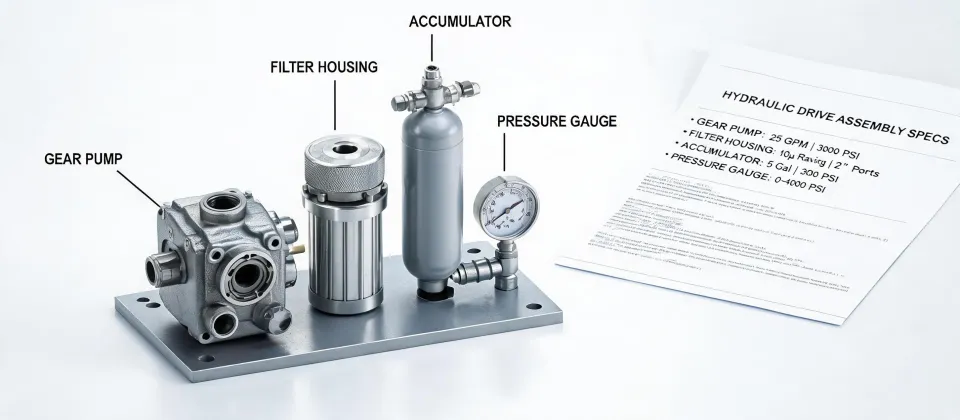
You'd think it's straightforward, but it isn't. A simple Google search for 'hydac catalog' brings up a mix of official PDFs and distributor splashes. The official HYDAC website (hydac.com) has a download center that's updated quarterly, but navigating it takes patience. What I do: ask your preferred Hydac industrial equipment reseller for their internal part number cross‑reference. They often have a consolidated price list that includes lead times. In Q2 2024, I compared three resellers' catalogs and found price differences of up to 18% for the same filter element (unfortunately).
2. How do I choose a Hydac industrial equipment reseller – lowest price or longest relationship?
That's the classic dilemma. Last year, a new reseller quoted me 12% below our incumbent. The trigger event that changed my mind? A critical gear pump arrived with swapped port threads because the new guy 'assumed' metric. We lost two days of production. Now I use a weighted scorecard: 40% price, 40% reliability, 20% service. The upside of the lower quote was $900 savings per order; the risk was exactly that kind of failure. Was it worth it? Not when the line went down.
3. What should I check when vetting ball bearing suppliers?
Ball bearing suppliers are a dime a dozen, but not all bearings are created equal. When I audit potential suppliers, I ask for three things: (1) the ISO 9001 certificate and the scope (some only cover assembly, not manufacturing), (2) a batch traceability report for their last three shipments, and (3) a documented failure analysis process. One supplier I almost signed in 2023 couldn't provide the last one. I walked away. A year later, that same supplier had a recall on a mis‑hardened race – we dodged a bullet.
4. Where can I find an AC motor diagram, and why does it matter for procurement?
Searching 'ac motor diagram' returns thousands of generic images. What you need is the connection diagram specific to the motor's winding configuration (star vs. delta) and terminal numbering. Without it, wiring mistakes can fry the drive. I've seen a technician connect a 6‑lead motor incorrectly on a $5,000 servo drive – total write‑off. Now every motor purchase I approve includes a PDF of the connection diagram. When I request quotes, I explicitly ask vendors to confirm they'll supply the diagram. It's a small thing that saves big headaches.
5. What happens when a linear actuator fails – and how do I prevent it?
'What happens when a linear actuator fails' is a question I wish I'd asked before our first incident. In our case, a ball screw actuator lost lubrication due to a worn seal. It seized mid‑cycle, snapped the coupling, and damaged the mounting bracket. Total repair cost: $2,800. Plus three days of downtime (ouch). Prevention: specify actuators with integrated wear indicators or sealed lubrication systems (common in Hydac's linear actuator lineup). Also, set a preventive replacement schedule – for our high‑cycle stations, every 18 months. That $400 preventive kit beats a $2,800 emergency fix every time.
6. Are Hydac parts really 'premium' enough to justify the price?
This is the question I get from my finance team. I built a TCO calculator after getting burned on 'cheap' substitutes twice. Let me give you a real cost breakdown: we bought an aftermarket filter element for $12 vs. Hydac's $28. In six months, the cheap element collapsed, sending debris into our proportional valve. Valve repair: $1,100. The 'savings' vanished. I'm not saying every Hydac part is worth it – for non‑critical applications I use generic bearings and seals. But for anything that touches your main hydraulic circuit? Stick with the catalog number. The data speaks for itself (and my spreadsheet).