-
What Happens When a Linear Actuator Fails?
-
The Comparison: Reactive Repair vs. Preventive Qualification
-
Dimension 1 – Total Cost After a Failure
-
Dimension 2 – Root-Cause Accuracy
-
Dimension 3 – Motor Selection and Stalled Actuator Behavior
-
Using the HYDAC Filter Catalog as a Preventive Checklist
-
So Which Should You Choose?
Reactive repair versus preventive qualification. If you've ever watched a linear actuator fail on a line, you know which approach feels more urgent. The problem is that urgency usually arrives after the cost is already locked in.
I'm a quality and compliance manager for an industrial fluid power and drive company. I review every specification and test report before it reaches customers—roughly 200 items a year. In our Q1 2024 quality audit, I rejected 9% of first deliveries on paperwork or performance grounds. That's not a complaint about suppliers; it's a reminder that details go missing when nobody checks the application against the part.
What Happens When a Linear Actuator Fails?
Electric and hydraulic actuators fail in different ways. An electric actuator driven by a single phase induction motor can stall under load, overheat, and trip a thermal overload. A three-phase AC induction motor can keep pushing until the mechanism bends or the breaker opens. A hydraulic cylinder can chatter, drift, blow a seal, or simply stop moving.
In my experience, the visible failure is rarely the full story. More often than not, the part that fails gets the blame; the condition that caused it stays hidden until the next failure.
The Comparison: Reactive Repair vs. Preventive Qualification
So here's the comparison I use in design reviews. The first approach, reactive repair, says: run it until it stops, then replace what broke. The second, preventive qualification, says: specify the part, the fluid, and the protection before installation.
I'll compare them on three dimensions: total cost after a failure, root-cause accuracy, and motor behavior when the actuator stalls.
Dimension 1 – Total Cost After a Failure
Reactive repair looks cheap until the machine stops. In our Q1 2024 audit review, we examined a failed hydraulic linear actuator on a mid-size machine. The maintenance team replaced the cylinder for about $1,800. Two weeks later, the pump sounded different and a second cylinder failed. Emergency delivery, overtime, and lost production brought the total close to $22,000. (Surprise, surprise.) The original cylinder was the victim, not the cause.
Preventive qualification would have caught the issue before installation: check the oil cleanliness, verify the filter element specs in the HYDAC filter catalog, and test the cylinder under load. That is not a guarantee of immortality for the machine, but it changes the odds. I only believed this after ignoring it once. We replaced the actuator, skipped the fluid check, and watched the second one fail the same way. The 5-minute check would have paid for itself many times over.
Dimension 2 – Root-Cause Accuracy
Reactive repair finds the symptom. Preventive qualification finds the cause. That's the second dimension, and it matters more than the parts price.
When a single phase induction motor hums but won't start an actuator, the reflex is to replace the motor. When a hydraulic cylinder drifts, the reflex is to rebuild the cylinder. But the actual cause is often a stuck valve spool, a worn pump, or oil below the target ISO 4406 cleanliness level. If you don't know the target cleanliness, you can't verify the machine.
I don't have hard data on industry-wide failure rates, but based on the failures I've reviewed, my sense is that contamination is involved in more than half of hydraulic actuator problems. That's why I use the HYDAC filter catalog as a specification document, not a parts list. It tells you what filter media and bypass options are available. Check the current version at the HYDAC official homepage (accessed February 2025), because catalog data changes.
The uncomfortable conclusion here is not that filter selection is expensive. The surprise is how many OEM drawings don't state a cleanliness target at all. When the spec doesn't say it, someone downstream has to guess. Guessing is a reactive strategy.
Dimension 3 – Motor Selection and Stalled Actuator Behavior
This is where the AC induction motor conversation comes in. To be fair, a single phase induction motor is a legitimate choice for small, intermittent linear actuators. A valve gate that opens a few times a day doesn't need a three-phase motor with a VFD. But I've seen systems where a replacement motor was swapped from three-phase to single-phase because the price looked better, and the duty cycle made it fail within months.
An AC induction motor is not just a rotating part. It is a torque curve, a thermal limit, and a starting characteristic. A single phase induction motor usually needs a start capacitor and a relay, so it has a different starting torque from a three-phase motor. If the actuator jams, motor behavior changes the outcome. A smaller single-phase motor will draw locked-rotor current, heat the windings, and trip an overload if one is installed. A larger three-phase AC induction motor may keep producing torque until the mechanism bends or the breaker opens.
The preventive approach is to specify the motor against the actuator duty cycle, not just against horsepower. That means checking the load profile, starts per hour, ambient temperature, and the mechanical protection: limit switches, torque limiters, and a properly coordinated overload relay. (Note to self: make overload relay coordination a mandatory line in our design review checklist.)
In my opinion, what happens when a linear actuator fails is directly tied to that decision. If you prevent the stall from becoming a motor failure, you save the actuator, the motor, and the coupling. If you don't, you replace the whole chain.
Using the HYDAC Filter Catalog as a Preventive Checklist
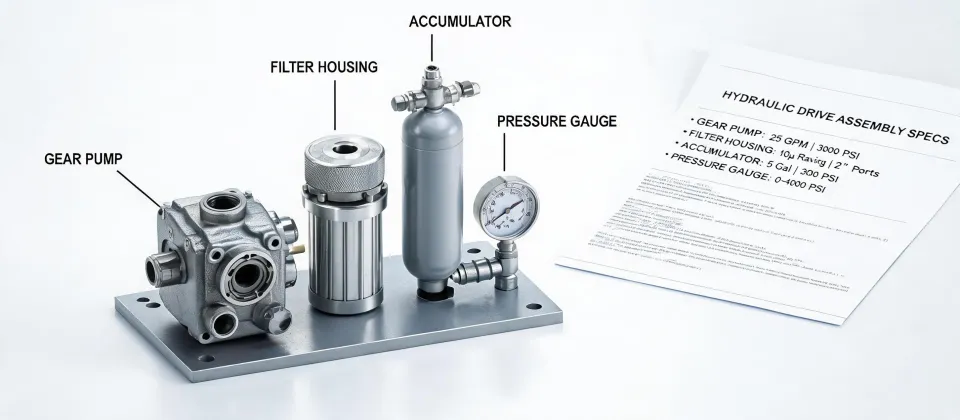
For hydraulic and electrohydraulic systems, the easiest preventive step is to verify the filter. I keep the HYDAC filter catalog open during every spec review. On the HYDAC official homepage, you can find the current catalog and product data. I recommend downloading the version you plan to use and dating it. If you rely on memory or supplier hearsay, you are back to reactive.
- Check the filter rated flow against the pump flow.
- Check the filter element media rating against the target ISO 4406 cleanliness code.
- Check the bypass valve setting against the pressure and temperature range.
- Confirm the filter housing accepts the element you specified yesterday.
That last item (surprise, surprise) has caught us more than once. A small catalog revision can change the element form while the housing part number stays the same. The catalog is the source of truth.
So Which Should You Choose?
If the machine is being retired next month, repair it and move on. I am not going to tell you to invest in preventive qualification for equipment that will be scrapped. But for any system with more than a few months of life left, choose prevention.
My experience here is based on mid-size industrial equipment—typically 5 to 50 kW drive packages. If you are working on a mining haul truck or a clean-room medical actuator, your numbers will be different. The logic won't be.
Here's my minimum list before approving a design:
- Verify the filter spec from the HYDAC official homepage or the current HYDAC filter catalog.
- Confirm whether the motor is a single phase induction motor or a three-phase AC induction motor, and match it to the actuator duty cycle.
- Write the target ISO 4406 cleanliness code on the drawing.
- Set limit switches and torque limiters so a jammed actuator doesn't stall the motor.
- Test under load before releasing the system.
If you skip those items, I hope you don't have to learn the way I did. What happens when a linear actuator fails is not just a mechanical question. It's a question about the decisions you made before the machine ever moved.