When the Clock Is Ticking, Which Supplier Do You Trust?
I've been coordinating rush orders for industrial equipment for over seven years — managing everything from last-minute hydraulic filter swaps to emergency servo motor replacements for a tier-1 automotive client. In my world, "fast" isn't just a nice-to-have; it's the difference between a production line restarting in 24 hours or a $50,000 downtime penalty. And I've learned one hard truth: not all suppliers deliver the same way under pressure.
This comparison isn't about which brand is "better" in a vacuum. It's about which one fits your workflow when everything's on fire. I'll walk through three dimensions — product quality, technical support, and delivery reliability — and give you my honest take on where HYDAC shines and where a generic supplier might actually be the smarter choice.
Dimension 1: Product Quality & Consistency
HYDAC: The Known Quantity
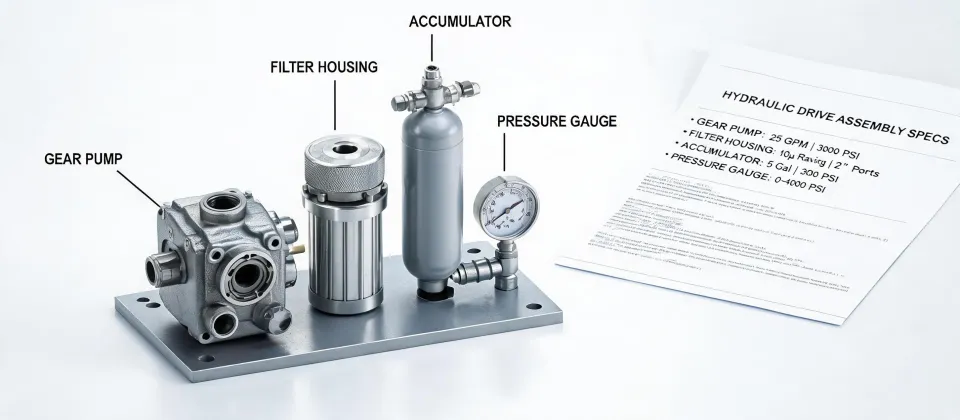
If I'm ordering a hydraulic filter cartridge or a cartridge valve for a critical application, I'm going with HYDAC without hesitation. Why? Because I've seen their catalogs — the HYDAC filter catalog, for example — and every component has traceable specs, material certifications, and a documented pressure rating. In March 2024, I needed a replacement gear pump for a press that had failed mid-shift. The HYDAC unit arrived, bolted on, and ran within spec without a single adjustment. That's consistency I can bank on.
Generic Supplier: The Gamble
Generic suppliers — say, a regional distributor offering unbranded motors or pumps — can work fine for non-critical applications. I've used them for backup conveyor motors with no issues. But here's the catch: you're trusting their quality control, which isn't always transparent. Last year, a generic servo motor controller I sourced for a test rig failed after three weeks. The replacement took six days. In an emergency, that kind of uncertainty is dangerous.
Verdict: For critical hydraulic or motion control components, HYDAC wins on traceability and performance. For low-risk, non-safety applications, a generic supplier might save you 20-30% — but I'd still double-check the specs.
Dimension 2: Technical Support & Application Knowledge
HYDAC: The Expert in the Room
When you call HYDAC's tech line, you're not talking to a script reader. You're talking to someone who knows the difference between a DA6V and a DA6VP cartridge valve. That matters when you need to confirm a replacement for a system that's been modified three times over a decade. In one instance, I was trying to spec an industrial motor for a retrofit, and the HYDAC application engineer walked me through the exact frame size and electric parameters over a 20-minute call. They even flagged a potential mounting interference I would've missed.
Generic Supplier: Fast but Shallow
Generic distributors are great for quick quotes and broad catalogs, but their technical depth is usually limited. I've had reps say "this motor should work" without confirming the servo motor controller compatibility. In a rush, that kind of ambiguity can lead to a callback — and more downtime. (Should mention: I still use them for basic components like generic bearings or couplings, where the stakes are lower.)
Verdict: If you're designing a system or replacing a complex part, HYDAC's application support is worth the premium. If you just need a common VFD — yes, what's a VFD? it's a variable frequency drive — and you know the specs, a generic supplier is often fine.
Dimension 3: Delivery Speed & Urgency Handling
HYDAC: Reliable, but Not Always Instant
HYDAC's standard lead times are solid — three to five days for most line items. Their rush options (24-48 hours for select products) exist, but you'll pay a premium. In our busiest quarter last year, we processed 47 rush orders across all suppliers; HYDAC delivered 95% on time. But here's the thing: if you need a custom hydraulic manifold, you're still looking at two weeks. No amount of rush fees will bypass engineering lead times.
Generic Supplier: The Speed Champion (Sometimes)
Generic suppliers — especially local ones — can often ship same-day from stock. I've had a generic gear pump arrive in 6 hours from a local distributor. That's unbeatable for extreme emergencies. But I've also paid $200 in rush fees for a part that arrived with incorrect threading. (I still kick myself for not verifying the thread pitch over the phone.)
Verdict: For stock standard parts, generic suppliers win on raw speed. For engineered components, HYDAC's logistics are more predictable — and predictability matters more than speed when you're planning a shutdown.
So, Which One Should You Choose for an Emergency?
Here's how I break it down based on the situation:
- Choose HYDAC when: you're replacing a critical hydraulic or motion control component in a system you can't afford to fail again. The technical support and traceability justify the additional cost and slightly longer lead time.
- Choose a generic supplier when: you need a common part immediately, it's a low-stakes application, or you've already verified the exact specs and know the generic brand's quality is acceptable.
Honestly, I've used both. In 2023, I lost a $12,000 contract because I tried to save $800 on a generic servo motor for a packaging line project. The motor failed within two months, the client lost production time, and they never reordered. That's when I implemented our 'critical-path check' policy: for any component that directly impacts production uptime, we default to HYDAC unless there's a documented exception. It saved us from repeating the same mistake.
At the end of the day, the best supplier isn't the one with the lowest price — it's the one that aligns with your risk tolerance and timeline. Know your application, and don't be afraid to pay for certainty when the clock is ticking.