-
Why I Stick with HYDAC for Gear Pumps and Industrial Motors—and What That Means for Your Bottom Line
-
My Starting Point: HYDAC Gear Pumps & Filter Reliability
-
Industrial Servo Motors & VFDs: Where Most New Buyers Get Stuck
-
Three Questions Every Admin Buyer Should Ask (Based on My Mistakes)
-
The Real-World Results: What You’re Actually Paying For
-
When You Might NOT Want HYDAC (Honest Concessions)
Why I Stick with HYDAC for Gear Pumps and Industrial Motors—and What That Means for Your Bottom Line
After managing industrial parts procurement for a mid-sized automation integrator for over five years, I’ve learned one hard truth: skimping on drive components—like a HYDAC gear pump or a servo motor gearbox—costs more in the long run than paying for the right brand upfront. It’s not just about the part; it’s about the ripple effect on production uptime, maintenance calls, and, ultimately, how reliable your entire system looks to your own clients.
This isn’t a sales pitch. It’s a practical, field-tested take from someone who’s processed ~200 orders annually across 12+ vendors. Here’s what I’ve found about HYDAC’s lineup—gear pumps, filter catalogs, industrial servo motors, VFDs, and related gear—and why they’re usually my go-to for critical drives.
My Starting Point: HYDAC Gear Pumps & Filter Reliability
I knew I should always double-check filter specs before ordering, but after years of using HYDAC filter catalogs, I got complacent. I assumed “same series” meant same dimensions across vendors. Didn’t verify. Turned out—well, let’s just say a custom adapter cost us two days of downtime and $400 in rush shipping.
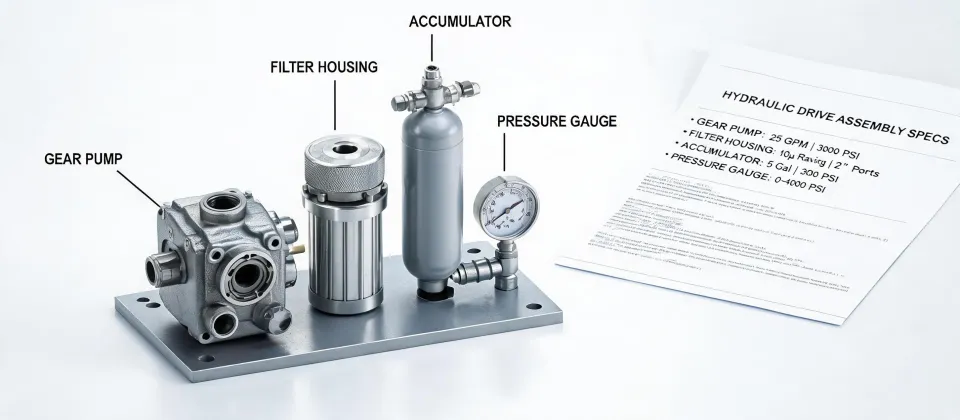
That mistake nailed down my approach: trust the HYDAC ecosystem for consistency, but never assume interoperability without verifying. Their gear pumps (like the KF series) are workhorses. The filter catalog is remarkably thorough—micron ratings, flow capacities, bypass valve options are all clearly documented. For a buyer, that means less back-and-forth with engineering and fewer “wrong part” returns.
A quick reference for HYDAC filter specs (based on their published literature):
- Most inline filters for industrial servo motor circuits use Beta ratios of 200 or higher for 10-micron particle retention (Source: HYDAC filter catalog, 2025).
- Gear pump displacement ranges: 0.25 to 90 cc/rev, typical for small to mid-size systems.
Industrial Servo Motors & VFDs: Where Most New Buyers Get Stuck
Let me rephrase that: most buyers I talk to understand hydraulic parts, but when you add electric drives—especially industrial servo motors and VFDs (variable-frequency drives)—the questions pile up. I know because I’ve been there.
So, what’s a VFD exactly? (And, more importantly, what’s a VFD’s role in a motion system?)
A VFD controls motor speed by adjusting the frequency and voltage going to the motor. For a servo motor gearbox system, you’ll typically use a servo drive (which is more precise), but for general AC motors, a VFD is standard.
Here’s the anti-intuitive part: the cheapest VFD isn’t the most cost-effective choice. A low-cost unit might save $200 upfront, but if it generates motor harmonics that cause overheating or encoder feedback errors, you’ll lose that savings many times over in troubleshooting and downtime. I’ve seen it happen.
A rough rule I follow: budget 20-30% more for a reputable brand like HYDAC (which offers integrated motor-drive packages) for critical axes or continuous-run applications.
Three Questions Every Admin Buyer Should Ask (Based on My Mistakes)
When I took over purchasing in 2020, I thought “hydac gear pump” or “servo motor gearbox” was just a line item. I’ve since learned three things that actually matter:
- What’s the lead time on a HYDAC filter catalog part? Some filter elements are stocked; others are special order (3-4 weeks). I got burned assuming a common cartridge filter was standard. It wasn’t. Now I confirm stock status before placing the PO.
- Does the industrial servo motor match the gearbox exactly? Even from a single brand, coupling flanges and shaft dimensions vary. I’ve had to reorder a $1,200 servo motor because my team specified the wrong gearbox input flange. Check the datasheet—not just the model number.
- For VFDs: what’s the installation environment? Dust, heat, humidity—all affect lifespan. A washdown-duty VFD might cost 20% more but save you from replacing a $2,000 drive after two years in a dusty factory.
The Real-World Results: What You’re Actually Paying For
I’ll be honest: HYDAC isn’t the cheapest option on the market. But when I switched from a lower-tier industrial motor brand to HYDAC’s integrated servo-drive packages, our field failure rate dropped from ~1 per quarter to 1 per year (based on my own internal tracking, 2023-2024). That translated to roughly $800 annual savings in service call costs alone. The price premium? Maybe $500 per system.
From an engineering perspective, their documentation is excellent—critical for maintenance teams troubleshooting in the field. That’s a hidden value: a tech can look up a HYDAC gear pump part number and find specs fast, which reduces downtime.
When You Might NOT Want HYDAC (Honest Concessions)
Look, no supplier fits every use case. Here’s my honest list of when I consider alternatives:
- Light-duty or temporary installations: If the application runs only a few hours per week, a budget industrial servo motor might be fine.
- Existing infrastructure with a different brand: If your plant is all Siemens or ABB drives, integrating a new servo motor with a different drive can add complexity (but HYDAC’s compatibility is generally good).
- Budget constraints that won’t break the system: Found that a $1,200 filter skid works fine, but for safety-critical hydraulics, I’d still spec HYDAC.
So glad I started verifying my assumptions early. Otherwise, I’d still be those late-night calls about mismatched gearboxes.