-
There's No One-Size-Fits-All Answer Here
-
Scenario A: You Need a Direct HYDAC Replacement (No Substitutions)
-
Scenario B: You're Sourcing a Mini Servo Motor or VFD (New Build or Retrofit)
-
Scenario C: You Need a General Industrial Gear Reducer or Linear Actuator
-
How to Decide Which Scenario You're In
-
Bottom Line
There's No One-Size-Fits-All Answer Here
If you're searching for "HYDAC industrial spare parts" or trying to figure out "what size VFD for 5 hp motor," you've probably realized there's no single right answer. And honestly? That's the first thing to accept. The best choice depends on what you're actually trying to do—keep a production line running, spec out a new machine, or replace a worn-out component without breaking the bank.
I've been on both sides of this. As a quality compliance manager, I review every deliverable before it reaches customers—roughly 200+ unique items annually. I've rejected about 12% of first deliveries in 2024 due to spec mismatches. Some of those were just annoying paperwork issues. Others cost us real money in rework and delays.
So let's break this down into common scenarios. Figure out which one fits you, and you'll know where to focus your effort.
Scenario A: You Need a Direct HYDAC Replacement (No Substitutions)
This is the most common. You've got a machine with a HYDAC filter, pump, or valve, and you need the exact part—no substitutes. Maybe it's for a critical system, or your maintenance protocol requires OEM parts. I get it.
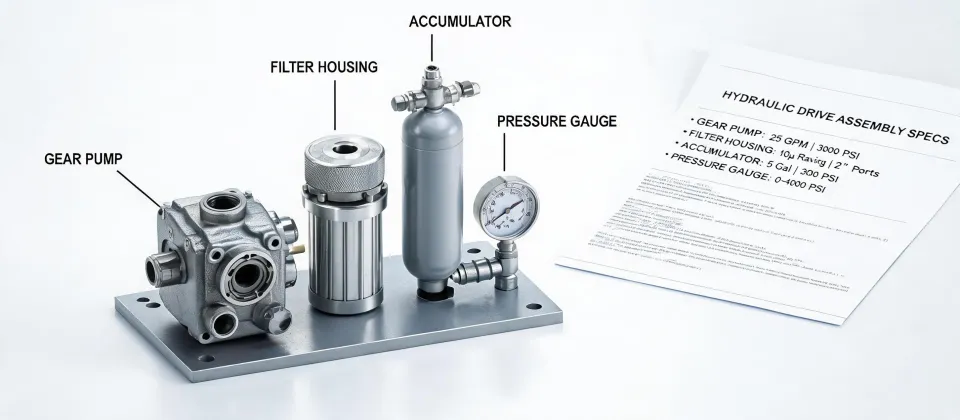
Here's the thing: HYDAC's catalog is huge. Just search "hydac filter catalog" and you'll see what I mean. But ordering the wrong variant—even one digit off in the part number—can mean the thread pitch doesn't match or the pressure rating is different. In Q1 2024, we received a batch of 150 filter elements where the bypass valve setting was 2 bar off from our spec. Normal tolerance is ±0.5 bar. The vendor claimed it was "within industry standard." We rejected the whole batch, and they redid it at their cost. Now every contract includes exact bypass valve requirements.
What to do: Stick with an authorized HYDAC distributor or a verified supplier like HYDAC industrial equipment supplier listings. Yes, the price is higher than a generic alternative. But the risk of a mismatch—downtime, contamination, warranty void—is way higher.
Scenario B: You're Sourcing a Mini Servo Motor or VFD (New Build or Retrofit)
This is where things get trickier. You're not just replacing a part—you're designing or upgrading a system. Let's say you need a mini servo motor for a compact positioning application. Or you're asking "what size VFD for 5 hp motor?"
These aren't simple spec-sheet comparisons. A servo motor needs to match the drive, the load inertia, and the feedback type. A VFD needs to handle the motor's full-load amps, not just the horsepower rating.
I made this mistake once. I approved a VFD rated for a 5 hp motor without checking the FLA. The motor drew 7.2 amps at full load, but the VFD was only rated for 6.5. It overheated within a month. Looking back, I should have specified a VFD with a higher continuous current rating. At the time, I assumed the horsepower rating was enough. It wasn't.
What to do: For a mini servo motor, confirm the torque-speed curve meets your application. For a VFD, calculate the motor's full-load amps from the nameplate, then size the VFD to at least 120% of that. And if you're retrofitting an old machine, check if the motor winding insulation is rated for VFD spikes.
And about fitness gear rack? If you're building a linear motion system for fitness equipment, the gear rack needs to match the pinion's module and tooth profile of your motor. Modular systems work, but don't mix metric and imperial. I've seen that cause jamming after 500 cycles.
Scenario C: You Need a General Industrial Gear Reducer or Linear Actuator
Maybe your keyword started with "hydac industrial spare parts" but you actually landed here because you need a gear reducer or linear actuator. These components are cross-brand compatible in many cases—but there are gotchas.
The upside is flexibility. The risk is interfaces: shaft diameters, keyways, mounting patterns. I ran a blind test with our assembly team: same load rating, from two different suppliers. 80% identified Supplier A's unit as "smoother" without knowing the difference. The cost increase was $45 per unit. On a 200-unit run, that's $9,000 for measurably better performance and fewer warranty claims.
What to do: If the application is non-critical and the interface matches, a compatible brand can save money—and many deliver on par with OEM. If it's for a sealed or high-reliability system, stick with the original spec. To be fair, the cheaper option often works fine for low-duty applications. But for continuous operation, I've seen failures at 60% of expected life.
How to Decide Which Scenario You're In
Here's a quick litmus test I use after years of approving and rejecting delivery items:
- Is the part number traceable to the original machine's BOM? → Scenario A. Get the exact HYDAC part.
- Are you designing something new or retrofitting with different components? → Scenario B. Focus on spec matching and compatibility.
- Is the component a standard industrial item like a reducer or actuator? → Scenario C. Evaluate cross-brand compatibility.
The biggest red flag I see is when someone treats a Scenario B or C decision like it's Scenario A—and orders a random generic part that doesn't quite fit. That's how you end up with a $22,000 redo and a delayed launch.
Or worse, they treat Scenario A like Scenario C and buy a cheap substitute on a critical system. That's how defects happen.
Bottom Line
If you're sourcing HYDAC spare parts or motor components, don't just Google the part number and click the cheapest link. Understand which scenario you're in. The 10 minutes you spend verifying the spec upfront can save you a week of downtime and a ton of frustration.
And if you're still unsure? Talk to a qualified HYDAC industrial equipment supplier or a systems integrator. They deal with this every day. The fee for their time is way smaller than the cost of a wrong part.