-
That One Time the 'Cheaper' Filter Cost Me My Week
-
The Surface Problem: It Didn't Fit
-
The Deeper Reason: It's Not About the Part
-
The Real Cost of Skipping the Catalog
-
What I Should Have Checked (That You Can Check Now)
-
The Simple Fix: Use the Official Resources
-
Final Thought: An Informed Buyer is a Better Buyer
That One Time the 'Cheaper' Filter Cost Me My Week
Look, I manage the purchasing for a mid-size company—about 400 employees across two sites. When I took over in 2020, I had a mandate: cut costs without cutting corners. By early 2024, I'd trimmed about 11% from our MRO spend. I felt pretty good about myself. (I really should have known better.)
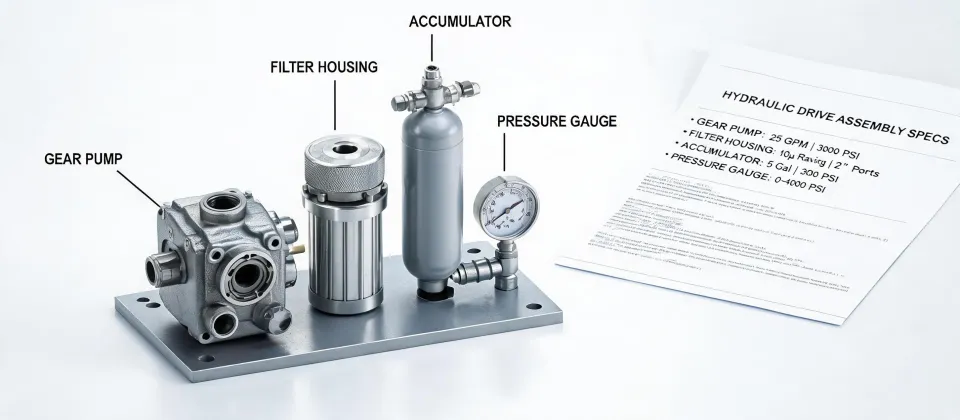
So when one of our senior engineers asked for replacements for a specific hydraulic filter, I saw an opportunity. The existing part came from HYDAC—solid brand, but I found an alternative that was 18% cheaper. The specs looked identical. The sales rep swore their product met HYDAC standards. I placed the order and felt like a hero.
I wasn't a hero. I was a problem waiting to happen.
The Surface Problem: It Didn't Fit
The filters arrived on time. They looked fine. But when the maintenance team tried to install them, the seal didn't compress correctly. The thread pitch was off by what our engineer called 'half a turn you can't see but you can definitely feel.'
At first, I was mad at the vendor. Then I was mad at myself. Because I'd done exactly what I warn my team not to do: I'd assumed 'same specifications' meant identical results across vendors. Didn't verify. Turned out each had slightly different interpretations of 'equivalent.'
The Deeper Reason: It's Not About the Part
Here's the thing—and this took me a while to really understand—the problem wasn't about the filter itself. It was about the system. You cannot treat a HYDAC filter like a generic commodity because the company builds its gear to work together. That filter is designed with specific pressure drops, specific bypass valve settings, and compatibility with their own housings. The 'equivalent' was equivalent on paper, but it wasn't equivalent in function.
This lesson applies way beyond filters. It applies to anything where precision matters. I see this with gear couplings too—people pick a random coupling because the shaft size matches. But the real question is about torque capacity, misalignment tolerance, and whether it can handle the specific load cycle of your machine. Same with brushless DC motor control—the controller is specific to the motor's back EMF curve. Swap in a different controller and you're not controlling it properly.
The Real Cost of Skipping the Catalog
That bad filter cost me:
- $450 for the parts I couldn't return (restocking fee and shipping)
- 3 days of lost production on that line—the engineers couldn't just swap parts on the fly
- 6 hours of my time dealing with crisis procurement, expediting the real HYDAC parts from the official catalog
- Lost credibility—the engineer didn't trust my judgment for the next two quarters
The 'cheaper' option cost us more than the genuine part. But worse than the money: it cost time. And in a factory environment, time is everything.
What I Should Have Checked (That You Can Check Now)
After that disaster, I built a small checklist for any critical component like filters, couplings, or motion control parts. I'm sharing it because I don't want you to learn this the hard way.
- Don't trust the 'equivalent' claim—ask for a cross-reference from the vendor's own catalog. If they don't have one, that's a red flag.
- Check the official HYDAC filter catalog—yes, go to the source. Understand the flow rate, the micron rating, the pressure rating, and whether it's designed for line or return service. A filter is not just a basket with holes.
- For motor control—especially brushless DC motor control—the controller and the motor must be tuned together. A generic driver will not optimize performance. It might not even run.
- For mechanical parts like gear couplings—don't just match shaft diameters. Check the torque rating at the operating speed, and the allowable misalignment. Small differences kill bearings.
- Understand the system context—I now ask the engineer: 'What happens if this part fails?' If the answer is 'stop the line,' I buy from the source.
The Simple Fix: Use the Official Resources
I've learned that the shortest path to a good decision is to start with the manufacturer's own documentation. The HYDAC official homepage and their parts catalog have all the information you need. It's not hidden. It's just that we sometimes avoid it because it's easier to get a quick price from a distributor.
The same goes for understanding terms like VFD. If you've ever asked 'what's a VFD?' (and I did, genuinely, because I wasn't an engineer), the answer is simple: it's a variable frequency drive. It controls motor speed by adjusting the frequency of the power supply. But the deeper question—'what's a VFD in my system?'—requires understanding the motor, the load, and the control interface. That's where education matters.
Final Thought: An Informed Buyer is a Better Buyer
I still believe in looking for good deals. That's my job. But I also believe in knowing what you're buying. I'd rather spend 10 minutes explaining options than deal with mismatched expectations later. An informed customer asks better questions and makes faster decisions.
So yes, check the HYDAC filter catalog. Learn the basics of brushless DC motor control. Understand what a gear coupling is actually doing. And if you're unsure about VFDs, take an hour to understand them—it'll save you days of frustration later.
I still kick myself for that filter mistake. But the lesson stuck. And that's worth something.